How to Choose a LinkedIn Outreach Agency | Built For B2B
How to choose a LinkedIn outreach agency: the acceptance rates and vetting questions that separate one that books meetings from one that sends requests.
9 Min Read
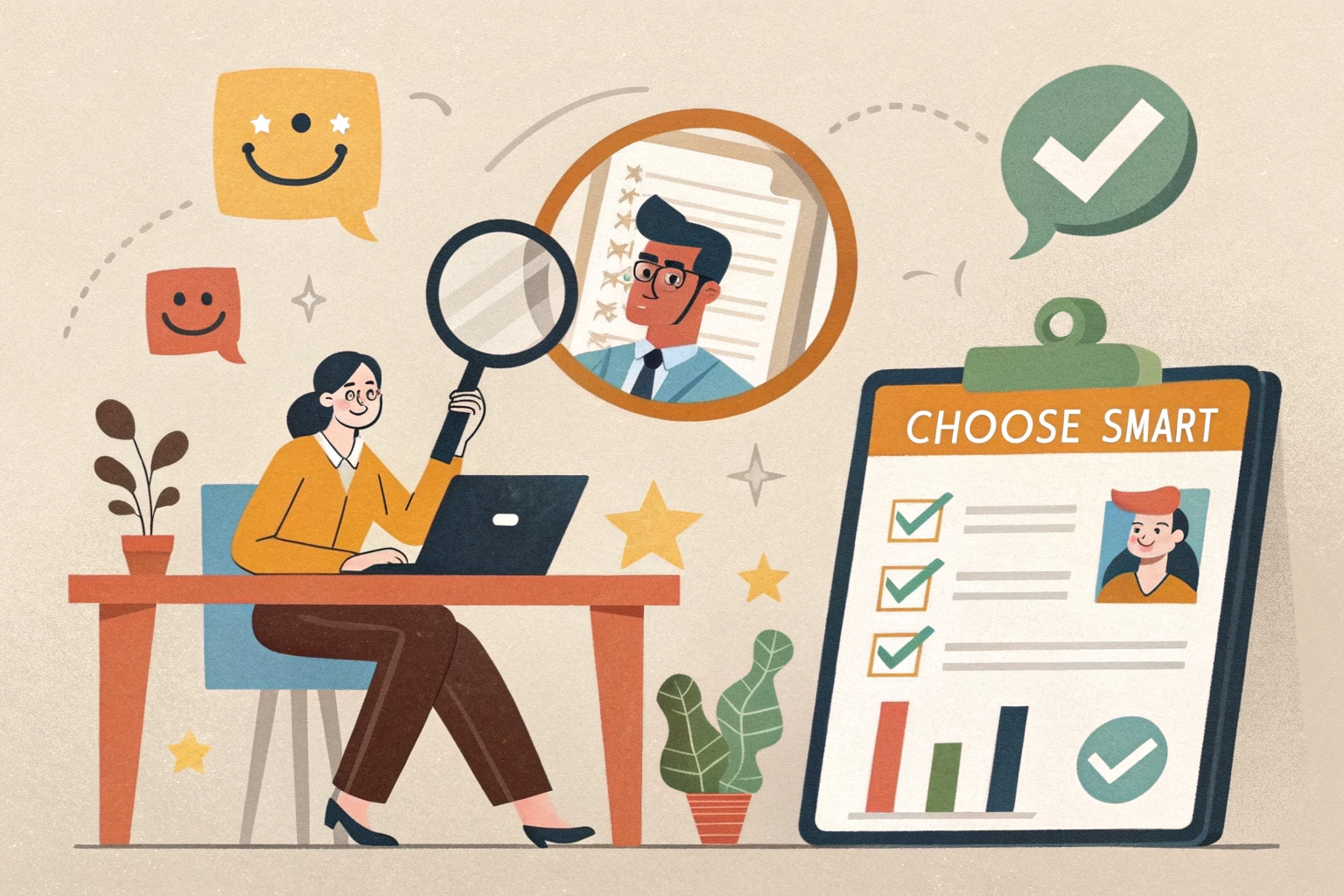
How to Choose a LinkedIn Outreach Agency That Actually Books Meetings
Picking a LinkedIn outreach agency is the easy part. There are a hundred of them. Picking one that books meetings without getting your account throttled is the hard part, and the difference between the two is rarely the price.
The problem is that most agencies sell you a headline metric, an acceptance rate or a reply rate, and never tell you how they got it. They can hit a number on a warm, tiny list and call it a win. Then they scale it up, the account hits a platform limit, and your outreach dies quietly while the invoice keeps coming.
This guide gives you the screening questions and the numbers that matter, so you can tell a real LinkedIn outreach operation from a template shop before you sign.
What a Good LinkedIn Outreach Agency Actually Does
A real agency runs LinkedIn outreach as a system, not a series of messages. Four things have to be in place before any message goes out, and you should be able to see all four before you sign.
Threading is a warning sign. If the agency treats cold email and LinkedIn as two separate campaigns with different messaging, different cadences, and a different sender identity, you are paying for two machines that pull in opposite directions. The decision maker sees a cold email from one company and a LinkedIn message from another, and neither feels connected. The better model is one engine with a single sender identity for the prospect, so email and LinkedIn reinforce each other. We built our LinkedIn outreach services around that joined-up approach for exactly this reason.
Warm up is not optional. Any agency that starts sending day one from a brand new account is either ignorant of the platform's rules or hoping you do not notice the crash coming in week three. LinkedIn throttles accounts based on connection request behaviour. You can read the official account health guidance yourself, but the practical version is that you build sending room over time, and you do not rush it.
The account is the asset. If an agency destroys your account's reputation, you cannot buy a new one the way you buy a new cold email domain. The sender on LinkedIn is a fixed identity. That is why account health is non-negotiable and why the acceptance rate matters as much as the reply rate. We covered the mechanics in our post on how to avoid LinkedIn restrictions during outreach, and the same rules apply to whoever you hire.
The Numbers an Agency Should Be Able to Quote
Any agency can quote you a reply rate. The numbers you want are the ones that reveal whether they actually run outreach at volume, because those are the ones nobody fakes.
A healthy acceptance rate on connection requests sits above 20 percent. Below that line, LinkedIn treats the account as a spam risk and silently shrinks its daily sending room. Acceptance is the gate. No accepted requests means no replies means no meetings, no matter how good the copy is.
A strong reply rate runs between 10 and 25 percent on accepted requests. That is not a typo. The reason the floor is that high versus the 3 to 8 percent you see in cold email is that LinkedIn is native to the person reading it. They open the app daily. Your message is sitting in front of them in a place they actually look. You can see the full ladder of benchmarks, by industry and by channel, in our breakdown of LinkedIn outreach reply rates in 2026.
Be suspicious of any agency quoting a reply rate of 40 or 50 percent. Those figures come from a handful of replies off a tiny, already-warm list. They do not survive contact with real cold outreach at volume, and an agency that promises them is promising you a number no honest operation can deliver.
The Five Questions to Ask Every Agency
Do not lead with price. Lead with these five questions, and write down the answers.
1. What is your acceptance rate, and how do you track it? The answer tells you whether they monitor the metric that actually protects the account. If they only quote reply rate, they are not watching the gate. If they cannot tell you how they pull acceptance data per campaign rather than per account, move on.
2. How do you handle a flat campaign? The right answer is, fix the list first, then the profile, then the sequence, in that order. The wrong answer is, increase volume and send more requests. That is how accounts get throttled. Bridge Group's SDR research confirms the same pattern repeatedly: reply quality tracks list quality, not raw sending volume.
3. Who is the sender, and what do they look like? On LinkedIn the sender identity is part of the product. The agency should show you the actual profiles that will run outreach, not a generic description. A sparse profile, no mutual connections, and a generic headline kill acceptance before the message is ever read. If the agency suggests using a fake or bought account, that is an instant no.
4. What is the sequence architecture? Is it a single message and one follow-up, or a proper multi-touch sequence with a value-add open, a problem message, evidence, and a meeting ask? The replies come on message two and three, not message one. We wrote the full blueprint for the message structure in our post on LinkedIn messages that actually get replies.
5. What happens to my agency account when we end? This matters more than most founders think. If the outreach runs from profiles the agency owns, you lose the account history and the relationship when you leave. If it runs from your team's profiles, you keep the asset. A real partner structures outreach so the relationships compound on your side.
Red Flags That Should End the Call
Some things are automatic disqualifiers, whatever the price or the sales pitch.
Promises of speed. "Meetings in two weeks" from a cold account is a fantasy or a shortcut, and the shortcut will cost you the account. Proper domain and account warm up takes three to four weeks minimum before volume is safe.
Oversharing of inboxes and databases. An agency that claims it can send to a shared database across all its clients is not doing personalised outreach, it is doing a blast. You want someone who builds a tight list around your firmographic and seniority profile specifically, using a filtered Sales Navigator search rather than a scraped pile.
No measurement of handoff quality. Replies are not meetings. Meetings are only worth something if they convert into qualified pipeline. Ask how the agency tracks what happens after a reply: does it schedule, qualify, and hand off, or does it just dump the reply in your inbox? A reply you have to chase is not a meeting. A reply that gets scheduled, qualified, and handed to your team is.
When outreach is done well the pipeline compounds, as one client's multichannel engine showed by building a qualified pipeline of $1.3 million in 45 days. That is the benchmark of a system that books meetings, not messages.
How Pricing Should Work
Real LinkedIn outreach is a people business and a systems business, so it is not cheap. A serious retainer for done-for-you LinkedIn outreach plus the joined cold email engine typically runs three to eight thousand dollars a month, with an initial commitment of around three months. Treat any agency quoting dramatically below that with suspicion. The cost of a botched outreach run, a throttled account and a burned list, is far higher than the saving on the retainer.
That said, price is the last thing you should optimise for. The economics of a good agency versus an in-house hire are the real question, and that logic applies on LinkedIn the same way it applies to cold email. Our comparison of outsourced SDR versus hiring in-house walks through the maths, and a LinkedIn-only agency is rarely the right structure versus a multichannel one that amortises the same sender health work across both channels.
How to Shortlist Before You Commit
Send the same brief to three agencies and compare how they respond. The way an agency sells itself is a preview of the way it runs outreach.
One will send back a generic pitch deck. One will send back a price. One will send back specific observations about your market, your competitors, and where your ideal accounts cluster, plus the numbers it expects and how it will verify them. That third agency is the one that runs outreach like a system.
Also check their own footprint. Agencies that sell LinkedIn outreach and cannot maintain a credible presence on LinkedIn are telling you more than their pitch ever will.
The Bottom Line
The best LinkedIn outreach agency is the one that protects your account while it books your meetings, and the two are linked. Watch for acceptance rate above 20 percent, a reply rate between 10 and 25 percent, a list that is built for you rather than shared, sequences that earn the reply, and autonomy over the accounts you run.
Get those five things right and the meetings follow. Get them wrong and no agency price makes up for a burned account and a wasted quarter.
We run LinkedIn outreach and cold email as one engine, with sender health and follow-up handled by the same team, so the prospect sees one brand instead of two competing campaigns. If you want us to audit where yours leaks, book a call. We will tell you exactly what is working, what is not, and whether you need an agency at all.
Put this to work on your pipeline.
We build and run cold email and LinkedIn outreach for B2B teams. From ICP definition to meetings in your calendar.