AI SDR vs human SDR is the wrong question. The right one is which jobs each does best. The practitioner breakdown for B2B revenue leaders.
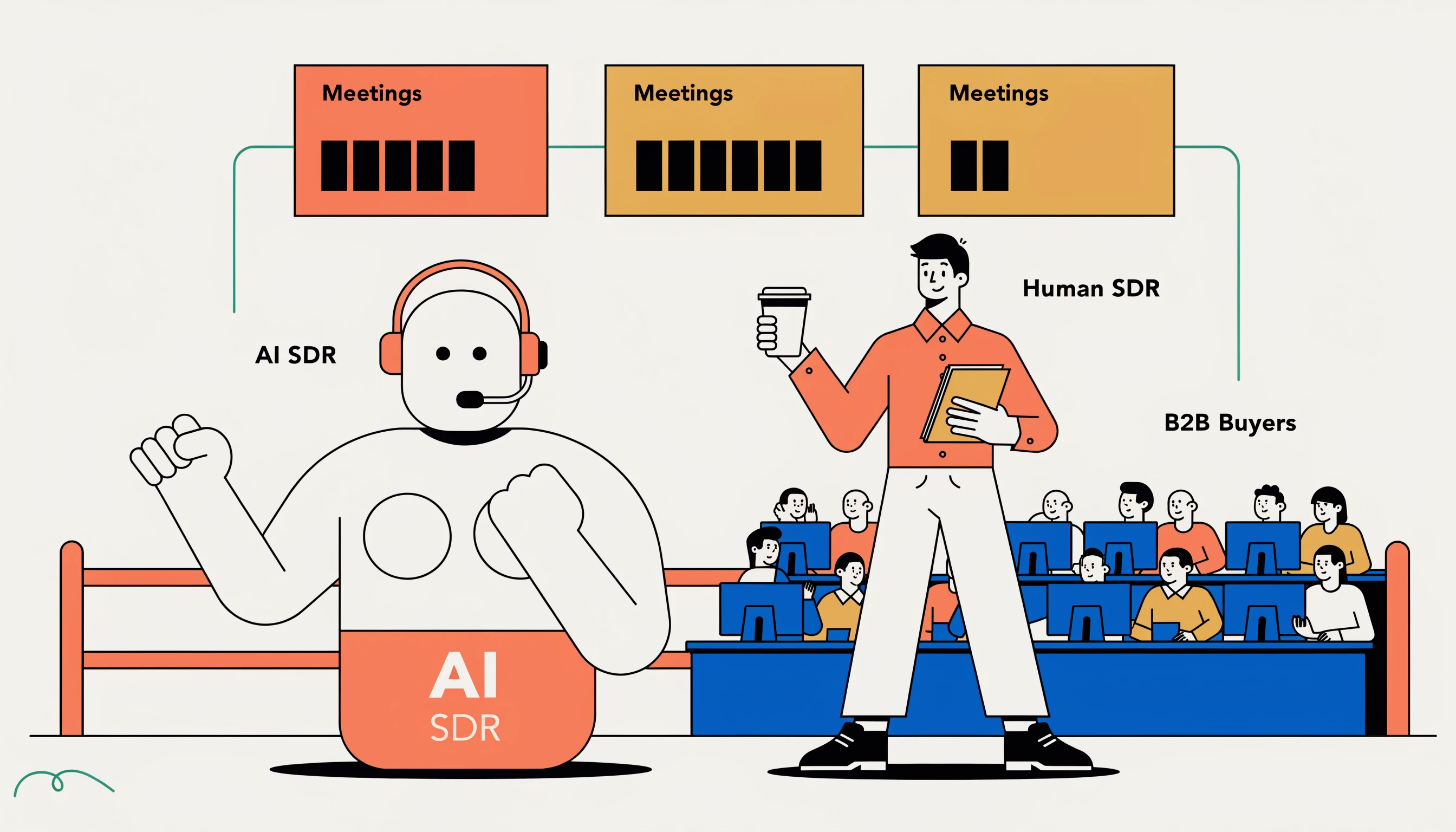
AI SDR is the most hyped category in B2B sales right now
Every week another AI SDR vendor pitches the same promise. Replace your sales development team with a $500-per-month AI. Book meetings while you sleep. Zero ramp time.
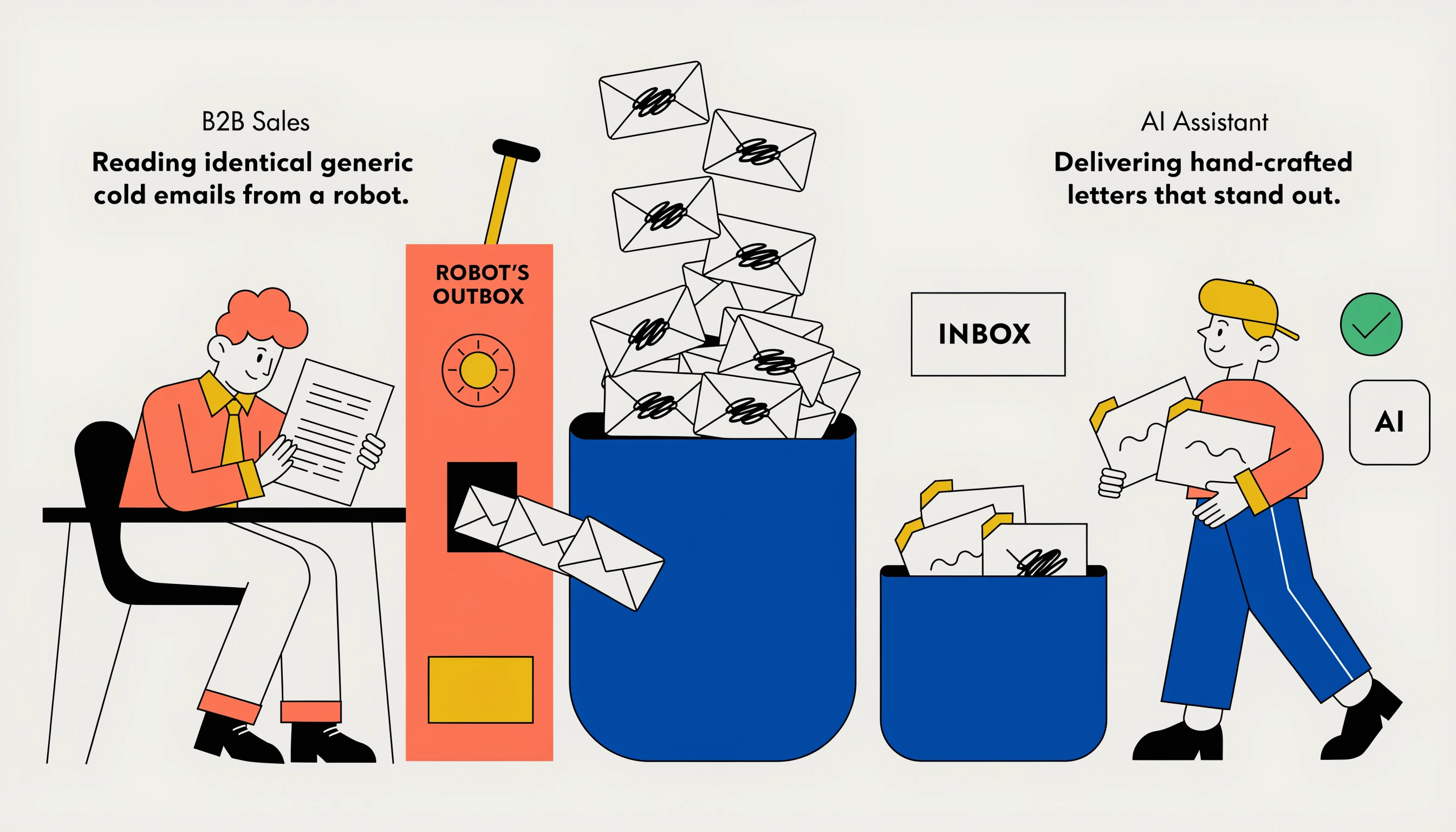
The reality is messier. Some AI SDR tools genuinely book meetings. Most do not. The teams winning with AI are not replacing humans, they are pairing AI with human SDRs and getting more pipeline from both. The teams losing are firing humans, buying AI, and watching reply rate fall off a cliff.
This is the practitioner breakdown. We run outbound for clients at Built For B2B using a hybrid model. Below is what works.
Where AI SDR beats human SDR
Four jobs. AI wins clearly.
1. List building and enrichment
A human SDR with Apollo builds 300 to 500 quality prospects a day. AI with Clay builds 3,000 to 5,000 enriched, signal-tagged prospects a day. 10x throughput. Same quality if the prompts are right.
2. First-draft personalisation at scale
A human SDR writes 30 to 50 personalised first lines a day before quality drops. AI writes 1,000 personalised first lines an hour. Once you have a tight prompt and signal library, AI is unbeatable here.
3. Reply triage
A human SDR sorting through 100 replies a day spends 90 minutes on triage. AI classifies the same 100 replies in 30 seconds at 88% accuracy. The 12% that get misclassified still flow through, just slightly delayed.
4. Multi-channel coordination
AI tracks engagement across email, LinkedIn, and intent signals simultaneously. Human SDRs juggle 2 to 3 channels with degrading quality. AI sees the full picture.
Where human SDR beats AI SDR
Four jobs. Humans win clearly.
1. Live discovery on a call
No AI SDR books a meeting and then runs the discovery. The handoff is a human. The whole exercise of pulling out pain points, qualifying budget, and reading buying signals from voice and silence is a human craft.
2. Handling ambiguous replies
"Maybe in Q3". "Not the right person, but I'll forward this". "We'd talk if your pricing was different". An AI classifier flags these as positive or negative. A human reads the subtext and writes the right next message.
3. Brand voice and judgement under pressure
When a prospect pushes back, asks a hard question, or threatens to call your CEO, AI produces safe corporate goo. A human responds with personality and judgement.
4. Long-term relationship work
The lead who says no this quarter, comes back next quarter, and closes the quarter after. AI loses context. Humans remember.
The economics
Numbers from our client work and the broader market.
Human SDR (UK)
Base salary: GBP 40,000 to 55,000
OTE variable: 30 to 50% on top of base
Total cost Y1 fully loaded: GBP 85,000 to 150,000
Tenure: 14 to 18 months average
Output: 30 to 60 qualified meetings a month at peak
Outsourced SDR (agency)
Monthly retainer: GBP 3,000 to 8,000
No hiring risk, no ramp, no tenure problem
Output: 20 to 50 qualified meetings a month
Stack and infrastructure included
We broke this down in detail in our outsourced SDR cost guide and in-house vs outsourced comparison.
AI SDR tooling
Pure AI SDR vendors: $300 to $2,000 per month
Component stack (Clay + Smartlead + APIs): $700 to $1,200 per month
Output: depends entirely on quality of setup. 0 to 60 meetings a month
The big gap. AI tooling delivers zero meetings if the prompts, signals, and infrastructure are wrong. Human SDRs deliver something even with bad inputs because they iterate. AI does not iterate without a human pointing it somewhere new.
The hybrid model that wins
The teams hitting their numbers in 2026 run this exact split.
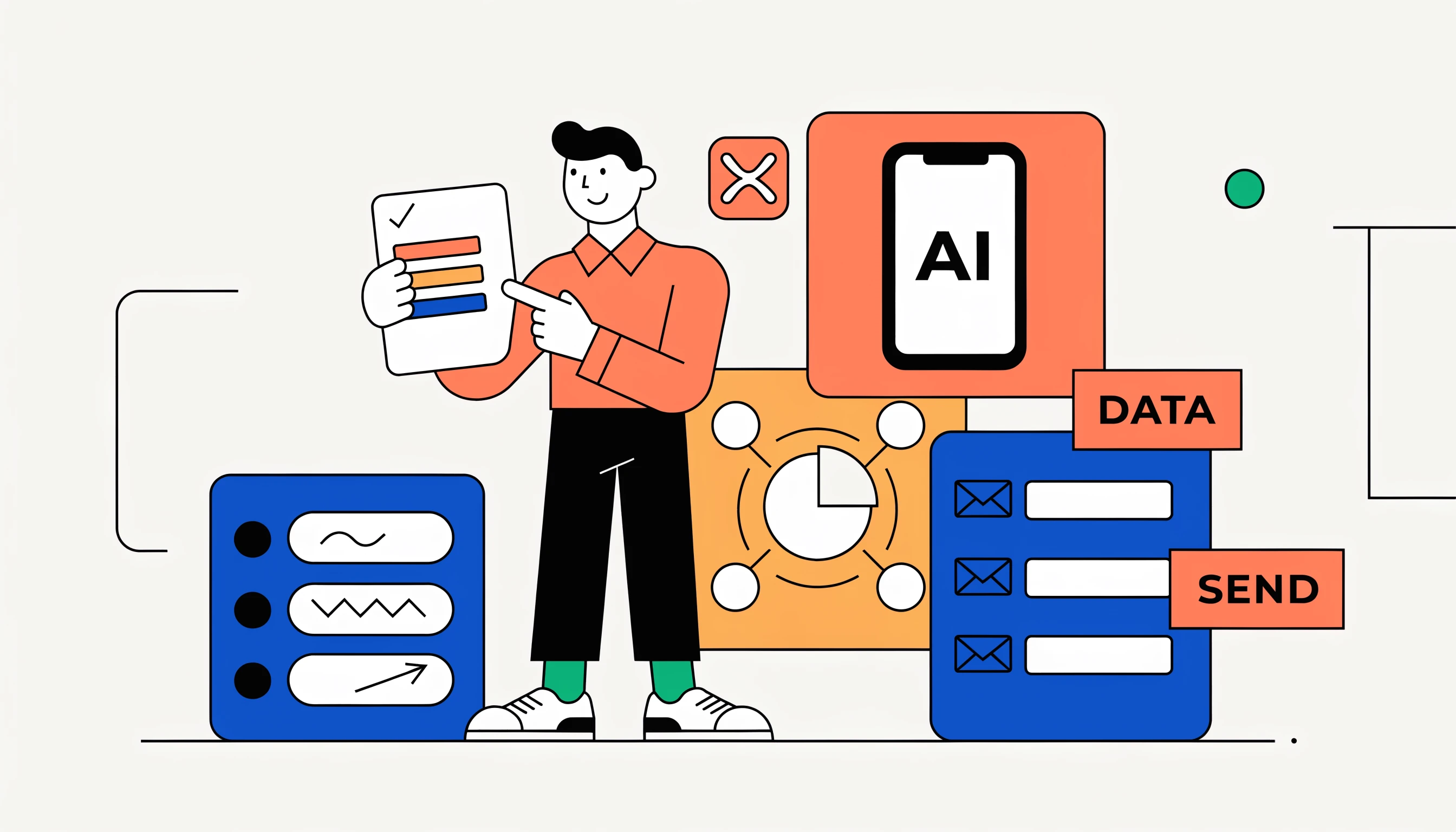
AI handles: list building, enrichment, signal extraction, first-draft personalisation, reply classification, follow-up sequencing.
Human handles: ICP definition, signal library design, prompt iteration, message review on first 100 sends per campaign, handling of every positive reply, discovery and qualifying calls.
In this model, one human SDR can manage 3 to 5x the volume they handled in 2022. We have seen this in action across GT Global, where $1.3M of pipeline landed in 45 days on a hybrid setup, and across Global Ocean Logistics, who hit $2M ARR over two years using the same model.
What pure AI SDR tools actually do
The vendors selling AI SDR in a box usually do four things.
Generate a templated email with light personalisation
Send through their own sending infrastructure
Classify replies and surface positive ones in a dashboard
This is fine if your ICP is broad, your offer is simple, and you do not care about brand voice. For most B2B SaaS, professional services, or fintech, it is not enough.
The reply rates we see from pure AI SDR tools: 0.5 to 2% positive reply. Sometimes lower. That is below the industry average of 3.4% and well below the 3 to 8% range a well-run hybrid model hits.
Where teams get this decision wrong
Three common mistakes.
1. Replacing SDRs because the CFO wants to cut cost
Cutting two SDRs to buy an AI SDR tool saves $200,000 a year on the spreadsheet. It usually costs $400,000 in lost pipeline over the same period. Cost discipline is fine, but the math has to look at output, not just expense.
2. Buying AI tooling and giving it to existing SDRs without a workflow change
Giving a Lavender or Regie license to a human SDR who is still writing one email at a time delivers minimal lift. The win is in the workflow change, not in the tool.
3. Going pure AI on the assumption that volume = pipeline
10x the volume at half the reply rate equals 5x the pipeline, in theory. In practice, deliverability tanks, brand reputation suffers, and the long tail of the campaign goes negative. Volume without quality is a vanity metric.
What the data says about SDR tenure and ramp
Bridge Group's 2024-25 SDR Metrics Report puts average tenure at 22 months. Our own data sits at 14 to 18 months on a 24-month rolling window. Ramp time for a new hire is 4 to 6 months before they hit quota. That means a typical SDR delivers 8 to 14 months of full productivity before churning.
AI does not churn. But AI also does not learn from a missed quarter. The hybrid model compounds because the human carries institutional knowledge across SDR cycles while the AI carries throughput.
The finance question is not "AI or human". It is "how many humans does the AI let me run". One human SDR on a hybrid stack covers what two used to. That is where the actual savings sit, not in headcount removal.
The second-order effect is on hiring strategy. If one hybrid SDR equals two old-model SDRs, your hiring profile changes. You hire fewer SDRs and pay them more. You raise the quality bar at the top of the funnel and remove the bench. That shift reduces churn because the role becomes more interesting. Better SDRs stay longer. The compounding makes the hybrid stack pay for itself within 90 days of any well-run rollout.
How to think about the AI SDR transition
Pick one campaign. Run the hybrid model on it for 90 days. Measure positive reply rate, meetings booked, pipeline created. If the numbers beat your previous pure-human or pure-AI baseline by 30% or more, roll it out across the rest of the book.
Do not announce the AI SDR transition to the team until the data is in. SDR teams panic when they hear "AI is replacing you". The hybrid model is not that. It is the SDR doing more with less manual work. Frame it that way.
For more on the operational side of running this stack, see our AI lead generation playbook and our AI cold email tools guide.
What to do if you are deciding right now
Five questions to ask yourself.
Is your ICP broad or narrow? Broad ICP (10,000+ prospects) favours AI-heavy. Narrow ICP (under 500) favours human-heavy.
Is your offer simple or complex? Simple offer (single use case, clear category) suits AI. Complex offer (multi-product, technical buyer) needs human framing.
What is your reply rate today? Under 1%, fix the inputs first. AI cannot fix bad targeting.
Do you have a signal library? If no, you are not ready for AI personalisation. Build the signals first.
Who handles positive replies? If the answer is AI, you are leaving money on the table. Humans handle positives.
The bottom line
The AI SDR vs human SDR debate is the wrong frame. The right frame is which jobs each does best, and how you stitch them together. AI is good at the throughput layer. Humans are good at the judgement layer. Stitch them and you outperform either alone.
Most teams who fully replaced human SDRs with AI in 2024 are quietly rehiring humans in 2026. The hybrid model wins.
Want us to build the hybrid setup for you? Book a strategy call.
Insights & Ideas
Explore Real Strategies, Trends, and Tips to Help Your Brand Grow.