AI personalisation lifts reply rate 3x when done right and tanks it when done lazy. The signals, prompts, and proof B2B teams need.

AI personalisation is the biggest scam in B2B outbound right now
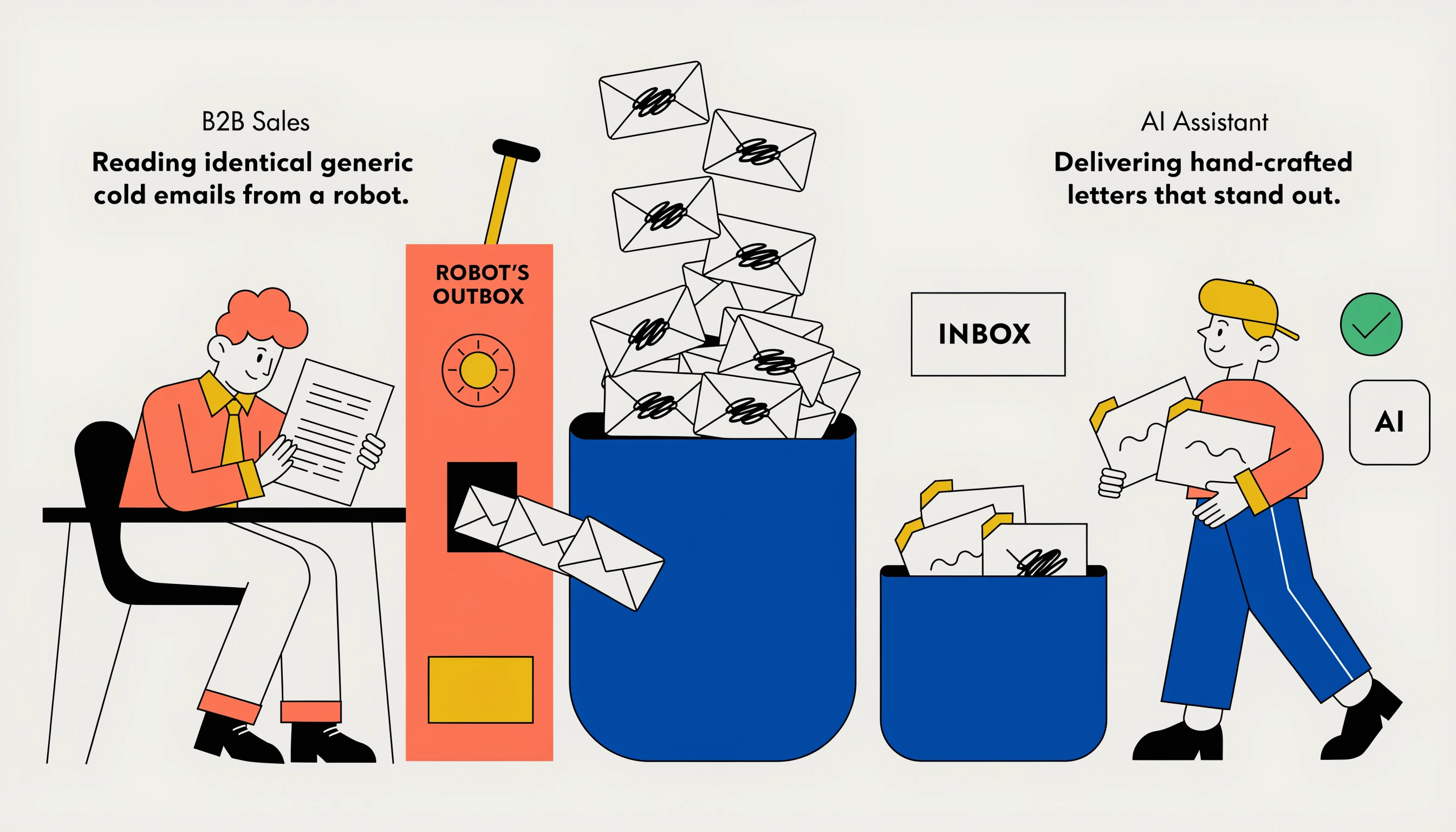
Vendors keep saying AI personalisation is the future of cold email. Half the time it is. The other half it produces robotic, generic openers that score worse than no personalisation at all.
We have run AI personalisation across 200,000+ cold emails in the last 12 months at Built For B2B. The pattern is clear. AI personalisation works when it is signal-led. It fails when it is profile-led.
This post breaks down both. If you are paying for AI personalisation and not seeing 3 to 6% positive reply rate, the fault is in your signal strategy, not your AI.
What AI personalisation actually means
There are three flavours and they are not the same.
Profile personalisation
AI pulls a LinkedIn bio and writes a line referencing it. "Saw you have been at Acme for 7 years." "Noticed you went to LSE." This is what most vendors mean when they say personalisation. It is also the worst-performing version.
Why? Because the buyer can spot it. Anyone with a public LinkedIn knows their job title and tenure. Referencing it adds nothing. Worse, it screams automation.
Content personalisation
AI pulls a recent LinkedIn post, blog article, or podcast appearance and references it. "Loved your post on Series B fundraising." Better than profile personalisation. Still mid. Most buyers do not care that you read their content. They care whether you have something useful to say about their job.
Signal personalisation
AI ties outreach to a specific business event. A funding round. A new hire. A product launch. A tech stack change. This is the version that lifts reply rate. Done right, signal personalisation pushes positive reply from 2% to 6% on the same list.
Why signal personalisation works
A cold email reader is asking themselves two questions in the first three seconds.
Is this relevant to me right now?
Is this from a real person or a machine?
Signal personalisation answers both. The signal proves relevance. The signal also proves human research, even when AI did the writing.
A profile reference fails both tests. Anyone can scrape a LinkedIn. The reader knows.
The signals that drive reply rate
Not all signals are equal. Here is the ranked list from our campaign data.
Tier 1: hiring signals
A company posts a job for the role your product serves. Hiring a VP Sales means they have a sales gap. Hiring 10 SDRs means they are scaling outbound. Hiring a Head of RevOps means they are buying tooling.
We pull these from Apollo job postings and LinkedIn job boards. The trigger is the job posting going live within the last 14 days.
Tier 2: funding signals
A recent funding round means budget. Series A to Series C funding rounds in the last 90 days are the sweet spot. Earlier and they are not buying yet. Later and procurement gates have closed.
Tier 3: leadership changes
A new VP, Director or C-suite hire in the last 60 days. New leaders own pipeline gaps and need to ship results in their first 90 days. Reply rates on this signal are consistently in the 5 to 9% range.
Tier 4: tech stack changes
A company adds or removes a tool you compete with or complement. We pull this from BuiltWith, Wappalyzer, or Clay's tech stack enrichment.
Tier 5: press and content
A news mention, podcast appearance, or major content release. Lower reply rate than the above but useful as a softer opener for warmer prospects.
The AI prompt that produces signal-led openers
Here is the prompt structure we use in Clay for client campaigns.
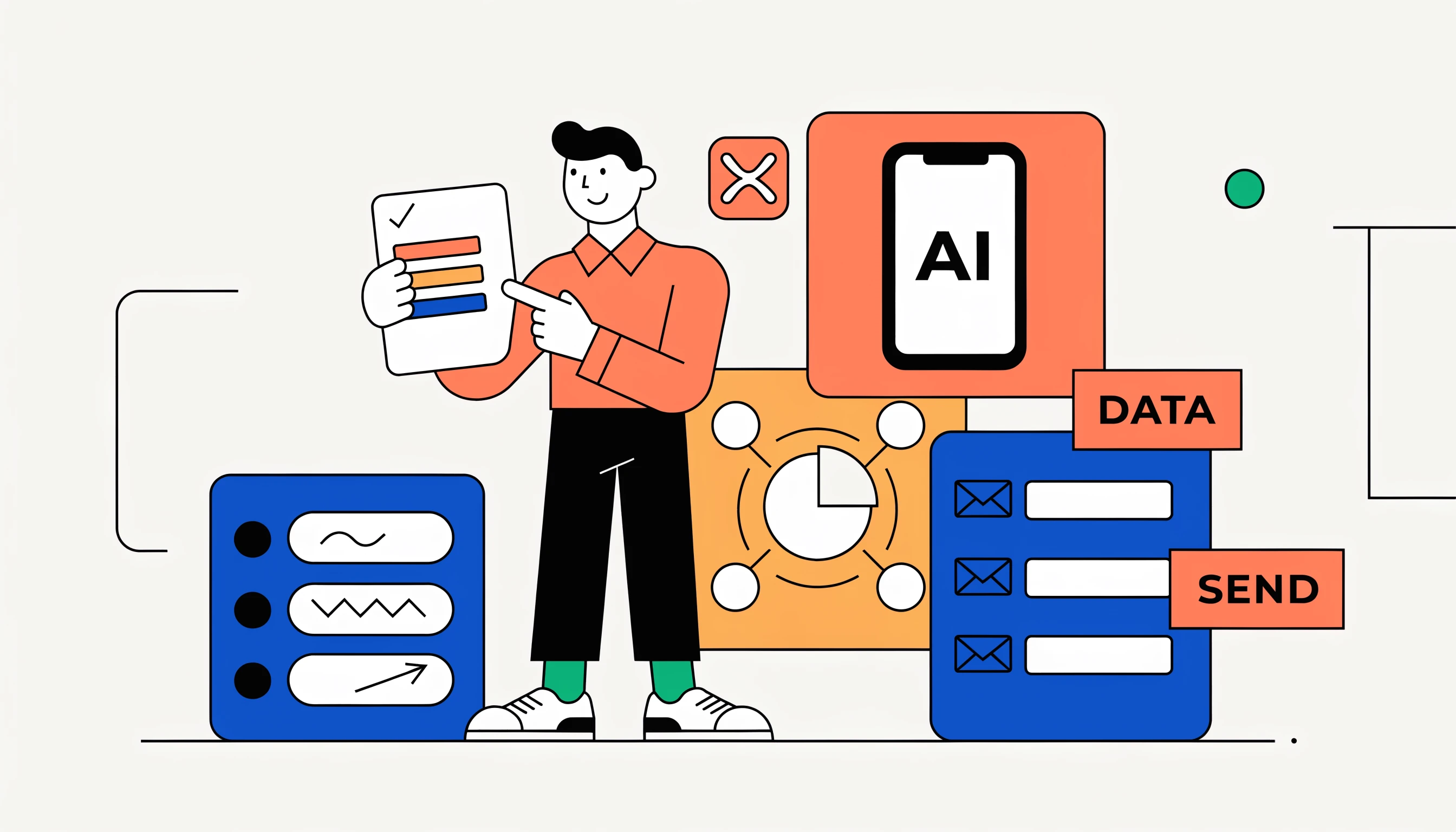
You are writing the first line of a cold email. Use this signal: [signal]. Reference it in one sentence. Tie it to this pain point: [pain]. Do not use compliments. Do not ask a question. Under 25 words. End the sentence in a way that flows into the next sentence about our offer.
Notice what is missing. We do not tell the AI to be "warm" or "casual" or "professional". Tone instructions hurt output. The constraints carry the work.
We iterated through 14 versions of this prompt across 100,000 sends. The version above outperforms every other variant we tested. The full prompt anatomy is documented in our ChatGPT cold email guide.
What kills AI personalisation
Three mistakes destroy reply rate. We see them constantly.
Mistake 1: stacking signals
Teams pull three signals and dump them all into the opener. "Saw you just raised Series B, hired a VP Sales, and launched in Germany." This reads as creepy stalking. One signal per email. Pick the strongest.
Mistake 2: turning the signal into the offer
AI tries to be helpful and ties the signal directly to your product. "Saw you raised Series B. Now is the perfect time to use [Product]." This is the same templated pitch every vendor is sending after the funding round. Use the signal as context, not as a sales hook.
Mistake 3: long openers
AI gets excited about its own research and writes 60 words of signal context. Buyers do not read past line two. Strip everything but the signal and the bridge to your offer.
How to measure if AI personalisation is working
Open rate is unreliable. Apple Mail Privacy Protection inflates it across the board. Stop reporting on it.
Measure these instead.
Positive reply rate by signal type. Hiring signals should hit 5 to 8%. Funding signals 3 to 6%. Content references 2 to 4%.
Reply rate uplift vs. a non-personalised control. Run 1,000 personalised and 1,000 templated emails to the same ICP. If the lift is under 1.5x, your AI is not adding value.
Time to first reply. Signal-led emails get replies in hours, not days. The signal feels timely so the buyer responds fast.
We documented these benchmarks across the 2025 sending year in our cold email benchmark guide.
Case study: how Leaptree lifted reply rate 4x
We ran a signal-led AI personalisation campaign for Leaptree in 2024. The before-and-after pattern shows what good AI personalisation does.
Before. Templated cold email referencing role and company. 0.8% positive reply rate. 14 meetings booked over 90 days.
After. Same list. Same offer. Same volume. Signal-led personalisation pulling hiring and funding triggers from Clay. 3.6% positive reply rate. 45 meetings booked over 90 days. $320,000 in pipeline generated.
The signal strategy was the difference. The AI was a tool, not the strategy.
A second case study: GT Global
The same model ran for GT Global across a security ICP and produced $1.3M of pipeline in 45 days. Hiring signals were the dominant trigger. The opener tied the recent VP Sales hire to the prospect's pipeline pressure. Reply rate hit 4.2% on a 12,000-prospect list.
Two lessons from both campaigns. First, the signal library has to be specific to the ICP. Generic signals produce generic openers. Second, the prompt is the second-most-important thing in the stack. The list and the signals matter more.
How AI personalisation differs across channels
Email and LinkedIn are not the same. AI personalisation on email forgives a longer opener. LinkedIn punishes it. AI personalisation on email runs at 1,000+ sends per week. LinkedIn caps at 80 connection requests per account per week.
We break down the channel decision in our AI LinkedIn outreach guide and the broader email vs LinkedIn comparison in cold email vs LinkedIn outreach. Same signal library. Different message structure.
We run both channels coordinated for clients via our LinkedIn outreach service, with the same Clay-driven signal stack feeding both.
When AI personalisation is not worth it
Three situations call for hand-writing instead.
ABM lists under 100 accounts. Hand-write. AI saves no real time at that volume and the buyer expects effort.
Senior buyers (C-suite at enterprise). They have seen every AI opener variant. Hand-write or send a video instead.
Warm prospects on a referral list. The relationship is the personalisation. Do not waste a referral on AI-generated openers.
For cold lists between 500 and 50,000 accounts, AI personalisation is the right answer. That is where the volume justifies the setup and the lift compounds.
The 90-day rollout
Week 1 to 2. Pick three signals you can reliably pull. Hiring, funding, leadership change is the safe trio. Validate the data sources. Use MXToolbox to confirm sending infrastructure is healthy.
Week 3 to 4. Write three prompt variants per signal. Test on 300 sends. Pick the winner.
Week 5 to 8. Roll out to 1,000 sends per week. Track positive reply rate by signal type. Drop signals that fail to clear 2% positive reply.
Week 9 to 12. Scale the winning signals. Layer in two new signals to test. Keep the rotation fresh.
The bottom line
AI personalisation works when it is signal-led, not profile-led. Buyers respond to relevance, not to evidence that you can scrape a LinkedIn page. Build a signal library, write a tight prompt, and measure positive reply rate by signal type.
If you want this stood up for you, we run signal-led AI cold email campaigns end-to-end. Book a strategy call and we will map your signal library before anything else.
Insights & Ideas
Explore Real Strategies, Trends, and Tips to Help Your Brand Grow.